



What Daily Life Looks Like on Palm Island and Hibiscus Island

Amit Bhuta
I use non-traditional marketing to inspire the most motivated buyers to pay the max for Miami luxury homes...
I use non-traditional marketing to inspire the most motivated buyers to pay the max for Miami luxury homes...
Palm Island and Hibiscus Island have traded legendary nightclub parties for tennis-court arguments, and apparently, both can rile up residents.
After all, Palm Island Park once hosted Miami's famous Latin Quarter nightclub, while Hibiscus Island had its own party scene at Club Lido.
These days, the entertainment more likely involves a disputed tennis shot or four neighbors trying to arrange a doubles match without turning the group chat into a full-time job.
Over by the waterfront homes, fish gather around private docks, gardens battle the salty breeze, and seawalls demand the occasional expensive invoice.
Even the houses have stories to tell, with Mediterranean-style homes sharing the streets with sleek modern mansions and a few pieces of old Miami history that many think have already disappeared.
The guarded entrance also offers plenty of privacy, and nobody gets a special pass when traffic backs up along the MacArthur Causeway.
Still, with Biscayne Bay in the backyard, a fascinating past beneath those quiet streets, and Miami's skyline lighting up across the water, these two islands give residents plenty to keep them in awe beyond their property values.
Here’s what a typical day is like on Palm Island and Hibiscus Island.
The Living Shoreline Detective
.png?w=1140)
Early Morning – The Backyard Has an Underwater Guest List
The fish around this Palm Island dock have no idea how expensive their neighborhood is, and they're certainly not contributing to the seawall maintenance fund.
Our waterfront homeowner starts her morning with coffee by the water, watching small fish gather near the dock while the tide slowly changes around the property.
Living along Biscayne Bay gives her a front-row seat to these little visitors, but she learned that the water doesn't always reveal what's swimming beneath it.
She keeps an eye on floating debris, checks the dock lines, and looks for anything that might need attention before the weekend.
Sometimes, a passing boat sends a few waves toward the seawall, reminding her that even a peaceful morning comes with a little movement.
She's interested in how marine life uses these structures along the shoreline, especially after learning about a new seawall project elsewhere on Palm Avenue.
After finishing her coffee, she heads inside to gather a few notes for a conversation with a marine contractor, because the underwater neighbors aren't the only reason she's been studying that wall.
 (1).png?w=1140)
Late Morning – Even Concrete Can Be an Eco-Friendly Neighbor
The humble seawall doesn't get attention in waterfront real estate photos, but replacing one can mean enough paperwork to fill its own filing cabinet.
Our resident meets with a marine contractor to discuss the aging wall along her property and whether a more environmentally friendly design might be possible.
She's been following a project on Palm Avenue where a 150-foot living seawall was installed in 2025 using specially shaped, 3D-printed concrete panels.
Rather than a completely smooth surface, the panels have textured areas inspired by mangrove roots, creating spaces where fish and other marine creatures can find shelter.
The contractor explains practical considerations, including permits, construction costs, and how the wall needs to protect the property from erosion and rising water.
She also asks about Miami Beach's Private Property Adaptation Program, which announced a new round of seawall improvement grants in October 2026, offering up to $20,000 in reimbursement for eligible projects.
There's plenty to review before a decision, especially since grant approval isn't guaranteed and waterfront construction comes with its own requirements.
By the end of the conversation, she has a better understanding of her options and a much longer list of questions than she started with.
 (2).png?w=1140)
Afternoon – The Garden Has to Outsmart Salt Spray
A beautiful waterfront garden is wonderful until the salty breeze starts treating your favorite plants like a personal enemy.
After lunch, our Palm Island resident heads outside to check the greenery around her patio and the landscaped area near the bay.
The combination of salt spray, strong sunshine, and occasional gusty winds means some plants need more attention than others.
She trims a few damaged leaves, moves a struggling potted plant farther from the water, and checks the soil around the newer additions.
Native coastal plants, such as sea grape and cocoplum, can be useful choices for South Florida properties because they're better suited to the local environment than many delicate ornamentals.
Still, even hardy plants need care, especially during dry stretches or after a windy afternoon.
While working, she notices a few boats passing through the bay and decides the water looks inviting enough for a short outing later.
With the garden looking presentable and the tools back in storage, she heads inside to clean up before exchanging her gardening gloves for the boat keys.
 (3).png?w=1140)
Evening – The Boat Gets the Last Word
The boat has spent the entire afternoon sitting at the dock, which seems unreasonable when Biscayne Bay is right outside the backyard.
With the weather cooperating, our resident gets ready for a short evening cruise, checking the fuel, safety gear, and dock lines before heading out.
She eases away from the private dock and heads into the bay, where Miami's skyline rises beyond the waterfront homes.
Depending on the route, there's plenty to watch, from other recreational boats moving through the water to larger vessels near the busy port.
It's a different view of the city from the one most people see while driving along the MacArthur Causeway, especially with the buildings catching the last of the afternoon light.
She keeps the outing short and returns to Palm Island before darkness settles over the water.
Back at the dock, she secures the boat, checks the lines, and takes another look at the shoreline that occupied so much of her day.
The evening ends on the terrace with something simple for dinner, a view of the illuminated skyline, and the pleasant knowledge that tomorrow's maintenance questions can wait until morning.
The Lost-Miami Story Collector
 (5).png?w=1140)
Morning – The Old Photographs Are Keeping Secrets
A photo of a glamorous nightclub has sent this Hibiscus Island resident down a research rabbit hole, and breakfast is now running considerably later than planned.
She's sitting at her desk, comparing old photographs and newspaper clippings with modern images of Palm and Hibiscus Islands.
What began as a casual interest in local architecture is now a collection of stories about the people, buildings, and businesses that once occupied these quiet residential streets.
One of her favorite discoveries is the Latin Quarter, the famous Palm Island nightclub that attracted entertainers and wealthy visitors during Miami's earlier party days.
Then there's Club Lido, a former Hibiscus Island gathering spot with an equally interesting history.
She opens another browser tab to examine an old map, trying to match the addresses and waterfront outlines with what she sees today.
The more she researches, the harder it becomes to imagine these islands filled with music, nightlife, and fashionable crowds.
With a few historical photos saved on her phone, she decides it's time to leave the computer and see what those familiar locations look like in person.
 (4).png?w=1140)
Late Morning – The Dance Floor Became a Basketball Court
Somewhere beneath the ordinary sounds of bouncing basketballs and tennis rackets is a piece of Miami nightlife history that deserves a dramatic soundtrack.
Our resident arrives at Palm Island Park on Palm Avenue, where the famous Latin Quarter nightclub once stood before a devastating fire ended its run in 1959.
The club, operated by Lou Walters, father of television journalist Barbara Walters, welcomed entertainers such as Sammy Davis Jr., Sophie Tucker, and Milton Berle.
Today, the property looks nothing like its glamorous past, with tennis courts, a basketball court, playground equipment, and open recreational space serving the neighborhood.
She compares an old photo on her phone with the park around her, trying to picture the elegant crowds arriving for an evening of entertainment.
It's especially amusing to think that a place once associated with elaborate shows and celebrity guests is now somewhere neighbors go to practice their backhands.
The park's transformation also tells her something about Palm Island's changing priorities, as the community eventually traded a busy entertainment venue for a public recreational space.
After spending time exploring the grounds, she heads to the residential streets for more pieces of old Miami that haven't completely disappeared.
 (6).png?w=1140)
Afternoon – A Century of Home Makeovers
Some Palm Island homes seem determined to preserve old Miami charm, while others look as if an architect just discovered the future.
Walking along Palm Avenue and Fountain Street, our resident studies the different architectural styles visible from the public sidewalks.
Older Mediterranean-inspired properties feature details like stucco walls, arches, and clay-tiled roofs, while newer homes favor broad windows, sharp lines, and contemporary designs.
The contrast gives her plenty to photograph, although she keeps her camera focused on architectural details and respects the privacy of the people living inside.
One address has particular historical significance: 93 Palm Avenue, once home to notorious gangster Al Capone.
The original mansion was demolished in August 2023 despite efforts by preservation advocates to save it, leaving one of the island's most recognizable historical landmarks absent from the streetscape.
For architecture buffs, it's a reminder that even famous buildings aren't guaranteed a permanent place in a changing neighborhood.
She makes a few notes on the houses that catch her attention, then heads back toward Hibiscus Island with another story to add to her collection.
 (7).png?w=1140)
Evening – The Missing Club Gets a Second Act
The most frustrating part of collecting neighborhood history is discovering a fantastic old building roughly sixteen years after someone knocked it down.
Back at her Hibiscus Island home, our resident returns to the story of Club Lido, a gathering place that operated during the island's early development.
The club closed in 1934, and the property later became associated with the Miami Beach Rod & Reel Club, a gathering spot for fishing enthusiasts.
The building survived for decades before being demolished in 2010, despite attempts to preserve it as a piece of local history.
She pulls up old photos and newspaper reports, piecing together a short digital collection that shows how the property changed over the years.
A friend who's visiting later that evening gets an enthusiastic preview, complete with photographs, historical details, and several remarks about how much Miami has changed.
The conversation eventually turns to other vanished landmarks, including the Latin Quarter and the former Capone mansion, giving them plenty to discuss over dinner.
By the end of the evening, her friend has learned more island history than expected, and our resident has another idea for a future research project.
The Court-and-Causeway Connector
 (8).png?w=1140)
Early Morning – Three Texts and One Tennis Court
Four adults, one tennis court, and a group chat that requires more negotiations than a business meeting.
Our Hibiscus Island resident is trying to organize a doubles match, which sounded wonderfully simple when everyone agreed to play.
He reserved a court at Palm Island Park the previous day through the city's neighborhood tennis booking system, but confirming who's bringing the balls has become another matter.
One friend wants to switch partners, another is running a little behind, and someone has already started making excuses about a sore shoulder.
Fortunately, the park is only a short distance away, so getting there doesn't require the usual Miami traffic calculations.
The island's guarded entrance and quiet residential streets make local outings relatively convenient, although reaching the shops and attractions beyond the causeway is another story.
He finishes his coffee, grabs his racket and water bottle, and sends one final message reminding everyone where they're meeting.
With the lineup finally settled, he heads toward Palm Island, hoping the actual tennis will involve fewer disagreements.
 (9).png?w=1140)
Late Morning – The Court Has a Reservation Policy
The first argument of the match arrives before anyone breaks a sweat, and naturally, it concerns who should serve first.
Palm Island Park has three tennis courts where residents can arrange recreational matches, with reservations available through the city's designated booking system.
Our resident and his friends arrive for their reserved session, warm up with a few easy rallies, and eventually settle on their doubles teams.
The match starts pleasantly enough, with everyone exchanging encouraging remarks and pretending not to care too much about the score.
That changes after a close line call, when one player insists the ball was out and another remembers seeing something entirely different.
A quick discussion settles the matter, although the losing side promises to bring it up again at the next match.
Between friendly competition and occasional jokes, the group gets a good workout without leaving the islands.
Once their court time ends, they pack up their equipment, agree on a possible rematch, and head off to continue their day.
 (10).png?w=1140)
Afternoon – The Smaller Island Has Its Own Meeting Spot
Palm Island might have the tennis courts, but Hibiscus Island has a quieter little park where nobody needs to argue about the score.
Our resident stops at Hibiscus Island Park on West Palm Midway to catch up with a neighbor.
The park is a modest green space rather than a major recreational attraction, offering a convenient place to spend a little time outside without leaving the neighborhood.
Their conversation begins with the morning's tennis match before moving on to a subject that affects more than just their small group of friends.
The islands have been dealing with utility improvements and other infrastructure concerns, including plans about underground utility lines.
His neighbor asks whether there's been any progress on the work affecting Hibiscus Island, prompting a comparison to the latest information they've received.
It's the sort of practical conversation that happens more often in a small community where residents share the same roads, entrance, and public facilities.
After catching up, he heads home with a reminder to check the neighborhood association's latest updates before the evening is over.
 (11).png?w=1140)
Evening – The Causeway Has Entered the Group Chat
Owning a home behind a guarded entrance doesn't mean you can negotiate with the traffic on the other side.
Our resident is back at his Hibiscus Island home, reviewing updates from the Palm, Hibiscus and Star Islands Association after a neighbor asks about improvements around the community.
The organization regularly discusses matters affecting island residents, including security, utility work, and traffic congestion along the MacArthur Causeway.
Those were among the issues raised during its April 2026 annual meeting, which brought together more than 40 residents virtually.
For someone who frequently travels between Miami Beach and Downtown Miami, the causeway situation is relevant, especially when congestion turns a relatively short trip into one that takes much longer than expected.
He sends a few updates to neighbors, adds a question about an ongoing project to his notes, and checks whether any community gatherings are coming up.
The association's social events are another reason he enjoys being involved, giving neighbors a chance to get acquainted outside of meetings and maintenance discussions.
With the messages answered, he finally puts his phone aside and settles in for the evening, relieved that the only remaining debate is whether his tennis partner will demand another rematch.
THE BIGGER PICTURE OF LIFE ON PALM ISLAND AND HIBISCUS ISLAND
What do these three different routines tell us about Palm Island and Hibiscus Island?
From the MacArthur Causeway, Palm Island and Hibiscus Island look like two little worlds that have figured out how to keep the rest of Miami at a comfortable distance.
The guarded entrance, quiet residential streets, and surrounding waters make that separation easy to understand, especially when Downtown Miami and South Beach are so close.
But having that much privacy comes with a few compromises, starting with the fact that restaurants, grocery stores, and most everyday services require a trip off the islands.
When the MacArthur Causeway gets congested, even a quick errand can turn into an unwelcome test of patience.
Waterfront ownership comes with its own financial responsibilities, from insurance and property maintenance to seawall repairs and flood protection.
Salt air, storms, and rising water levels don't care how impressive a house looks, so planning for the future is important.
The islands also face questions about what that future should look like, especially as older properties disappear and contemporary mansions take their place.
After all, the Latin Quarter, Club Lido, and Al Capone's former mansion are reminders that even places with extraordinary histories can lose the buildings that once made them famous.
Yet these aren't communities trying to become museums, and residents have good reasons to care about how their surroundings are changing.
With only a handful of shared recreational spaces, a tennis match, a park visit, or a neighborhood gathering can carry more social importance than outsiders might expect.
The local association adds another layer to that connection, giving homeowners a way to discuss concerns and influence decisions affecting the streets they share.
Of course, the privacy that attracts people to these islands may not appeal to someone who prefers walkable shopping districts, spontaneous restaurant visits, or a busy social scene right outside the front door.
But for residents who appreciate having Miami's energy nearby without bringing all of it home, that separation can be worth the extra planning and expense.
It's the quiet luxury of Palm Island and Hibiscus Island: knowing the city is right there whenever you want it, while having a place where you can close the front door and enjoy a little distance from everything else.
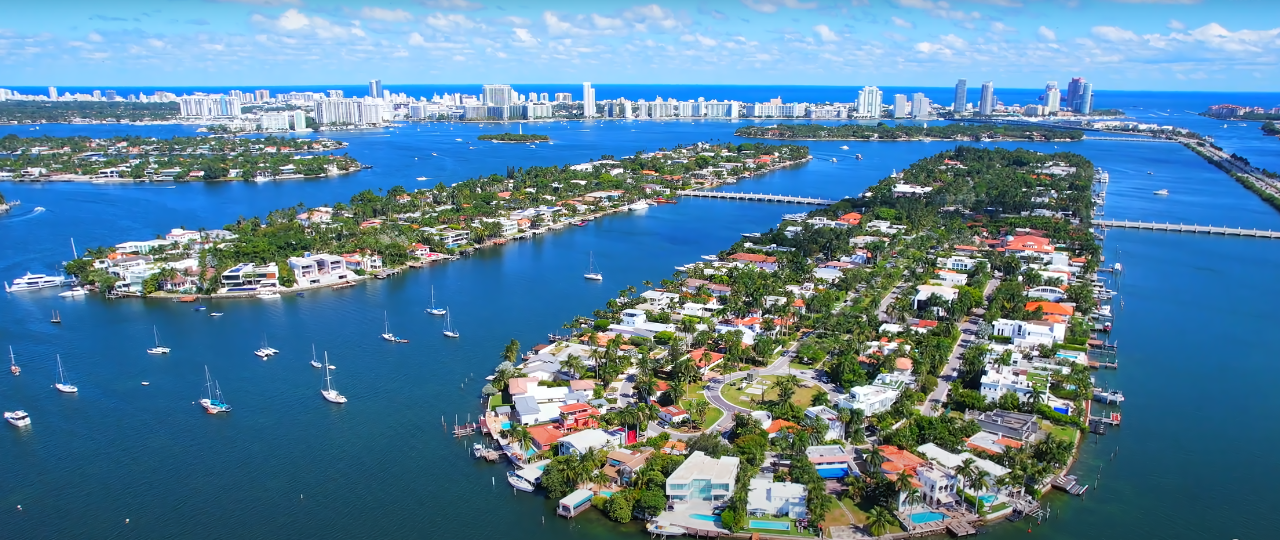
Palm Island| Hibiscus Island, Miami, Florida - EVERYTHING You Want to Know
Join us for an exciting escapade across the nooks and crannies of the Palm and Hibiscus Is...
The Ultimate Guide to Miami-Dade's Top 25 Gated Communities for Single-Family Homes
Discover Miami's top gated communities in this essential guide for luxury home buyers...


Miami's BEST Restaurants in EVERY Neighborhood
Check out the absolute BEST restaurants in every neighborhood of Miami, including the best...
Selling Your Home?
Who are we?
We are the ALL IN Miami Group out of Miami.
We are Colombian, Filipino, Cuban, German, Japanese, French, Indian, Syrian, and American.
We are Christian, Hindu, and Jewish.
We are many, but we are one.
We sell luxury homes in Miami, Florida.
Although some of our clients are celebrities, athletes, and people you read about online, we also help young adults find their first place to rent when they are ready to live on their own.
First-time buyers?
All the time!
No matter what your situation or price range is, we feel truly blessed and honored to play such a big part in your life.