



What Daily Life Looks Like on Star Island

Amit Bhuta
I use non-traditional marketing to inspire the most motivated buyers to pay the max for Miami luxury homes...
I use non-traditional marketing to inspire the most motivated buyers to pay the max for Miami luxury homes...
One bridge into Star Island? Well, that can't stop the day's guest list of a repair crew, a seawall inspector, and a music producer probably on his tenth attempt at the same song.
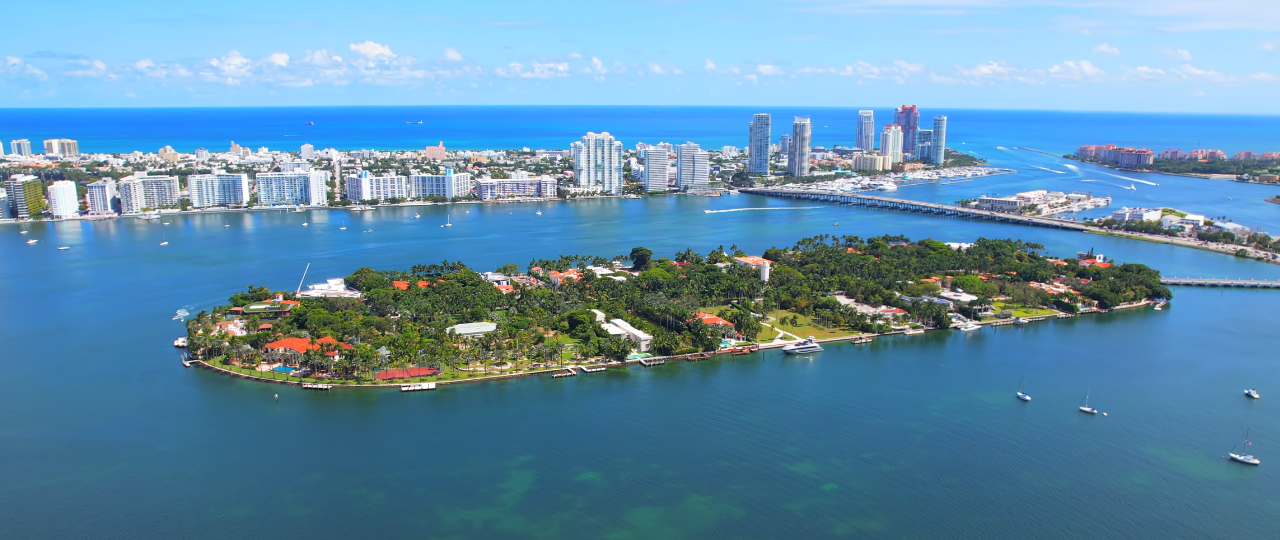
With only a few dozen homes, this little piece of Miami Beach runs on planning and coordination, despite what its peaceful, palm-lined streets might suggest.
Estate managers spend their mornings making sure the right people get through the gates, while homeowners keep a close eye on what Biscayne Bay is doing to their shorelines.
Behind another set of doors, someone might be recording the next big hit, assuming the singer and producer can finally agree on the chorus.
Even the island's nearly century-old water tower has found its way back into local talk, with efforts underway to secure its restoration.
It's a neighborhood where the smallest details demand serious attention, even with all the quiet that surrounds it.
After all, when your entire community shares one road, a long history, and a front-row seat to the water, there's bound to be more going on than the passing tour boats can see.
Here’s what a typical day is like on Star Island.
The One-Bridge House Manager
 (14).png?w=1140)
Early Morning — The Guest List Starts With a Security List
When an island has only one road connecting it to the outside world, coordinating arrivals becomes a bigger concern than telling someone to come over.
For this live-in estate manager on Star Island Drive, the morning begins with reviewing delivery schedules, contractor appointments, and the list of visitors expected at the property.
He checks in with household staff to confirm who's arriving, what work needs to be done, and whether anyone has requested changes to the day's schedule.
Since Star Island has a staffed entrance, he ensures approved visitors and service providers have the correct arrival instructions before crossing the bridge.
It might sound straightforward, but a last-minute delivery or delayed contractor can disrupt several other appointments when everyone's working around the same property.
Once the schedule is organized, he can move on to making sure everything planned for the day gets done without creating more problems.
 (15).png?w=1140)
Midday — Three Contractors, One Entrance
A large waterfront estate can have enough maintenance appointments to make an ordinary homeowner's repair list look surprisingly manageable.
By midday, he's coordinating an air-conditioning inspection, a pool-equipment service, and a delivery that needs to reach the property's service area.
Each contractor has a different task, and his job is to make sure they have the access and information they need without getting in one another's way.
The air-conditioning technician might need access to a utility room, while the pool specialist is working outside and the delivery crew needs somewhere to unload.
He checks on their progress, answers questions, and adjusts the schedule if something takes longer than expected.
Of course, someone finding another issue halfway through the appointment is always possible, adding one more item to his growing list.
By the time the workers finish, he's reviewed the completed tasks and identified anything that needs another visit.
 (16).png?w=1140)
Afternoon — Even the Private Dock Has a Checklist
A private dock on Biscayne Bay is convenient for boating homeowners, but keeping the waterfront equipment in good condition requires regular attention.
Later in the afternoon, the estate manager meets a marine-service contractor for the property's dock and related equipment.
They look for signs of wear on exposed fittings, check the dock area, and discuss anything that may need repair or replacement.
Saltwater, humidity, and regular use can take a toll on marine equipment, so small issues are worth addressing before they become expensive repairs.
He notes the contractor's recommendations and checks whether any proposed work will require additional approvals or specialist services.
The surrounding water might be beautiful, but he's more interested in making sure nobody encounters a loose fitting or damaged section of the dock.
Once they complete the inspection, he updates the maintenance records and heads back toward the main residence.
 (17).png?w=1140)
Early Evening — The House Is Ready Before Anyone Arrives
The quietest part of the estate manager's day often comes just before the people he's been preparing for finally arrive.
With the day's appointments finished, he makes one last round through the main residence and guest areas to confirm that everything is ready.
He checks that deliveries reached the right rooms, scheduled maintenance has been completed, and any areas used by contractors have been properly secured.
If the homeowners are returning that evening, he also coordinates with household staff to make sure their arrival arrangements are in place.
Most of the work is meant to go unnoticed, which is probably the best compliment an estate manager can receive.
After reviewing a few outstanding tasks for the following day, he closes his work records and returns to his staff accommodation.
It's been a full day of organizing people, equipment, and schedules to ensure the household runs without unnecessary interruptions.
The Tide-Line Tactician
 (18).png?w=1140)
Early Morning — The Water Doesn't Check Property Values
Biscayne Bay doesn't care how impressive a home's architecture is when high tides push water closer to the shoreline.
For this longtime Star Island homeowner, a recent period of elevated water levels made her more attentive to her property's seawall.
She heads into the waterfront garden to look for visible changes near the shoreline, including signs of soil movement, water intrusion, or deterioration around the structure.
She isn't trying to diagnose an engineering problem herself, but she wants to document anything unusual before discussing it with a professional.
Living directly on the bay means the seawall plays an important role in protecting the property, and waiting for obvious damage isn't always the smartest approach.
She takes a few photos, notes what she's observed, and prepares for a scheduled consultation later in the day.
The view is still impressive, but she's paying considerably more attention to the ground beneath it than to the boats passing in the distance.
 (19).png?w=1140)
Midday — The Engineer Has Some Expensive Questions
By midday, a coastal engineer arrives to inspect the seawall and discuss possible improvements.
They begin near the waterfront, where she points out the areas that caught her eye earlier.
The engineer examines the existing conditions and explains which concerns may require further investigation, along with possible repairs or flood protection.
She asks questions about materials, permitting, construction requirements, and how the proposed work might affect the dock and surrounding landscape.
Some options sound relatively straightforward until the conversation turns to engineering assessments and approvals.
Seawall work involves significant expenses, so she wants to understand the recommendations before committing to a project.
After the inspection, she reviews the next steps with the engineer and requests the documentation needed to evaluate her options.
 (20).png?w=1140)
Afternoon — The Paperwork Before the Concrete
Owning waterfront property requires plenty of paperwork, and protecting it from flooding can mean an entirely new collection of forms.
In her home office, she reviews the engineer's preliminary recommendations and looks into Miami Beach's Private Property Adaptation program.
In October 2026, the city opened applications for seawall improvement grants, offering eligible property owners reimbursement assistance of up to $20,000.
The funding isn't automatic, so she checks the requirements involving flood insurance, elevation documentation, project eligibility, and available funds.
She also reviews the estimated project costs to understand how much she may need to pay herself, even if her application is approved.
With several details still requiring professional input, she organizes the relevant documents and prepares questions for her next conversation with the engineer.
It's not the most exciting way to spend an afternoon, but preventing future damage is considerably more appealing than dealing with an emergency repair.
 (21).png?w=1140)
Early Evening — The Tower That Refuses to Be Forgotten
Later in the day, she meets another island resident near Buoy Park, the narrow public green space bordered by Star Island Drive.
Their conversation turns to the island's historic water tower, a surviving piece of infrastructure dating back to 1928.
In March 2026, Miami Beach officials discussed making its restoration a priority in the city's fiscal-year 2027 budget process, bringing renewed attention to the aging landmark.
She and her neighbor share thoughts about preserving a structure part of Star Island's identity for nearly a century.
For a place better known for its private estates, the tower offers a rare reminder of the island's earlier development and shared history.
They also acknowledge that restoring an old structure involves more than deciding it should look nice again, especially when it requires significant engineering work and public funding.
As they finish their conversation and head back toward their homes, the tower remains an unfinished chapter in the island's story.
The Bayfront Music Producer
 (22).png?w=1140)
Morning — Yesterday's Great Idea Needs Another Listen
A song that sounded brilliant the night before can become a very different story after a few hours of sleep.
That's why this Star Island music producer starts his morning in his private home studio, listening to the track he was working on last night.
He plays through the recording, checking the arrangement, vocal sections, and small details that might have been overlooked during a long session.
A section he previously loved now sounds too crowded, while another part could use a stronger transition before the chorus.
He makes a few adjustments, saves a new version, and writes down the changes he wants to discuss with his collaborators later.
Working from home lets him experiment without booking a commercial studio, but it also means deciding when to stop making changes.
After another listen, he finally puts the track aside and prepares for the musicians arriving that afternoon.
 (23).png?w=1140)
Midday — Soundcheck Without a Stage
Before the recording session begins, he goes into the studio to make sure the equipment is ready.
He checks the microphones, audio interface, headphones, and recording software, testing each setup to avoid technical problems once everyone arrives.
Different performers have different needs, so he also adjusts the microphone placement and prepares the room for the instruments being used.
He reviews his session notes, organizes the recording files, and makes sure the latest version of the song is ready for playback.
A microphone that suddenly stops working can waste everyone's time, so he prefers dealing with those problems before the musicians walk through the door.
Once the equipment is ready, he sends a quick confirmation to his collaborators and takes a short break before the session begins.
The goal is to spend the afternoon making music, not arguing with a cable that worked the previous day.
 (24).png?w=1140)
Afternoon — The Session Nobody Hears From the Street
When the singer and instrumentalist arrive, the producer welcomes them into his private recording space and goes over the plan.
They listen to the latest version of the song, discuss which sections need new recordings, and where the arrangement could use a little more work.
The singer begins recording while the producer listens carefully for details in the delivery, timing, and overall performance.
A few takes go smoothly, but one section takes longer because the chorus isn't coming together the way everyone imagined.
Rather than rushing through it, they experiment with a different approach, adjusting the phrasing and trying another arrangement.
Eventually, they capture a version everyone likes, giving the producer enough material to continue editing after the session.
By the time his collaborators leave, the song has made real progress, even if there are still several details to finish before it's ready for release.
 (25).png?w=1140)
Evening — Trading Studio Speakers for the Real Thing
After spending most of the day listening to the same song, the producer is ready to hear something completely different.
On a scheduled concert evening, he leaves Star Island and heads to the New World Center on 17th Street in Miami Beach.
The venue is home to the New World Symphony, which presents orchestral performances and other musical programs throughout its concert season.
He enjoys hearing the musicians work together, paying attention to how different instruments create texture, movement, and dramatic changes in a composition.
It's a refreshing change from his recording studio, where he usually hears individual tracks through headphones and makes adjustments one section at a time.
During the performance, he notices a few musical ideas that remind him of something he's been experimenting with in his own work.
He doesn't plan to copy what he hears, but experiencing another approach to arrangement gives him fresh ideas to explore.
When the concert ends, he heads back across the MacArthur Causeway toward Star Island, with tomorrow's studio work already taking shape in his mind.
THE BIGGER PICTURE OF LIFE ON STAR ISLAND
What do these three different routines tell us about Star Island?
A neighborhood where nearly every property has its own waterfront, yet everyone depends on the same narrow connection to the rest of Miami Beach, isn't considered common in Miami.
That single bridge creates a sense of separation that's difficult to find in a city known for its busy streets, crowded attractions, and constant movement.
For residents who value privacy, the arrangement is appealing, offering a quieter home environment without putting downtown Miami or South Beach completely out of reach.
But having one main entrance also means deliveries, service appointments, guests, and everyday trips depend on the same route, so careful planning is extremely important.
The island's small number of estates adds another interesting detail, as there are far fewer households than in most Miami Beach condominium buildings.
That can make the neighborhood relatively peaceful, although it also means residents won't find a grocery store, restaurant, or other everyday commercial convenience around the corner.
Meanwhile, the property's boundaries don't protect anyone from the challenges of living beside Biscayne Bay, where flooding concerns, saltwater exposure, and shoreline maintenance are part of long-term homeownership.
These responsibilities create an entire network of workers and specialists whose contributions are rarely visible from the sightseeing boats passing offshore.
And while Star Island's connection to famous musicians and entertainers gives it an unmistakable place in Miami's cultural history, much of the creative work associated with private residences happens out of public view.
That distance between what people can see and what happens behind closed doors is part of the island's character, letting residents keep their professional and personal lives largely separate from the crowds nearby.
Still, privacy doesn't erase the importance of shared history, especially when a landmark like the Star Island Water Tower needs public attention and preservation.
Its future raises a question that goes beyond restoring one old structure: how does a small, exclusive neighborhood protect the pieces of its past that belong to the broader story of Miami Beach?
For all its separation from the mainland and the rest of the barrier island, Star Island remains connected to the city's infrastructure, environmental challenges, cultural institutions, and public decisions.
And perhaps that's its most interesting contradiction: an island designed around private lives still has a future that depends on far more than what happens within its property lines.
Star Island, Miami, Florida - EVERYTHING You Want to Know
Embark on this virtual cruise across everything you WANT and NEED to know about Star Islan...

The Ultimate Guide to Miami-Dade's Top 25 Gated Communities for Single-Family Homes
Discover Miami's top gated communities in this essential guide for luxury home buyers...


Miami's BEST Restaurants in EVERY Neighborhood
Check out the absolute BEST restaurants in every neighborhood of Miami, including the best...
Selling Your Home?
Who are we?
We are the ALL IN Miami Group out of Miami.
We are Colombian, Filipino, Cuban, German, Japanese, French, Indian, Syrian, and American.
We are Christian, Hindu, and Jewish.
We are many, but we are one.
We sell luxury homes in Miami, Florida.
Although some of our clients are celebrities, athletes, and people you read about online, we also help young adults find their first place to rent when they are ready to live on their own.
First-time buyers?
All the time!
No matter what your situation or price range is, we feel truly blessed and honored to play such a big part in your life.